What Is Meshtastic?
Imagine your team is spread across a mountain. No mobile signal. You need to know where everyone is and whether they are okay. How do you stay in touch?
Meshtastic is one answer. It is a free, open-source system that turns small, affordable radio devices into a local communication network. No cell towers, no internet connection, no monthly fees. Just small devices talking to each other.
How does it work?
Think of it like a relay race. You send a short message from your device. If the person you are trying to reach is too far away, your message hops through other Meshtastic devices in between until it arrives. Each device in the network helps pass messages along.
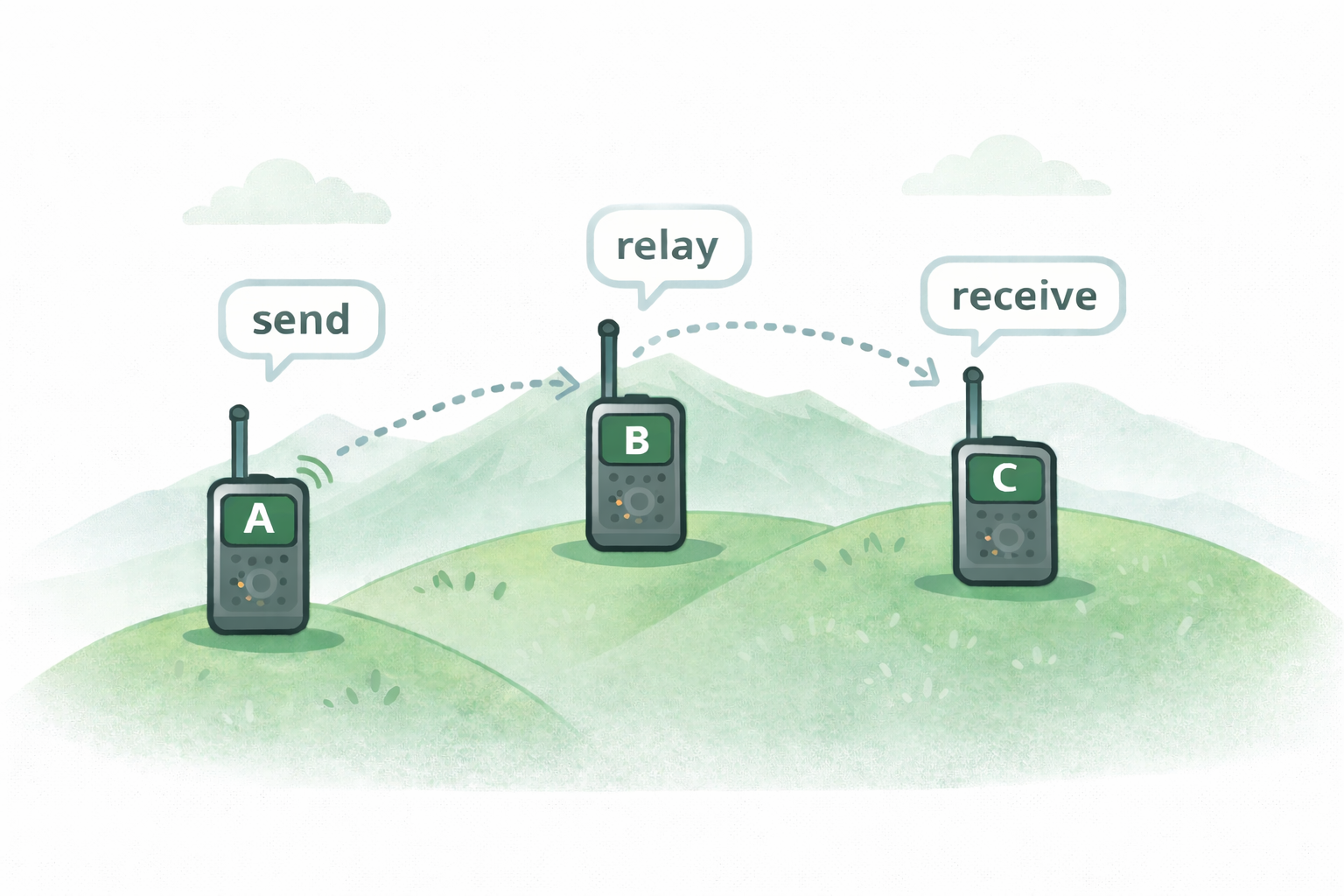
With direct line of sight, Meshtastic can reach surprisingly far. But there is no magic: when mountains or dense terrain block the signal, range drops quickly. That is where the mesh comes in. Even if two people cannot reach each other directly, devices in between can relay the message and keep the connection alive.
All messages are encrypted, so your content stays private even when it passes through someone else's device in the network.
Meshtastic handles short text messages, GPS positions, and sensor data like temperature or humidity. It does not send voice calls, audio messages, or video. Think of it as a quiet, reliable data channel for the information that matters most outdoors: where is everyone, and is everyone okay?
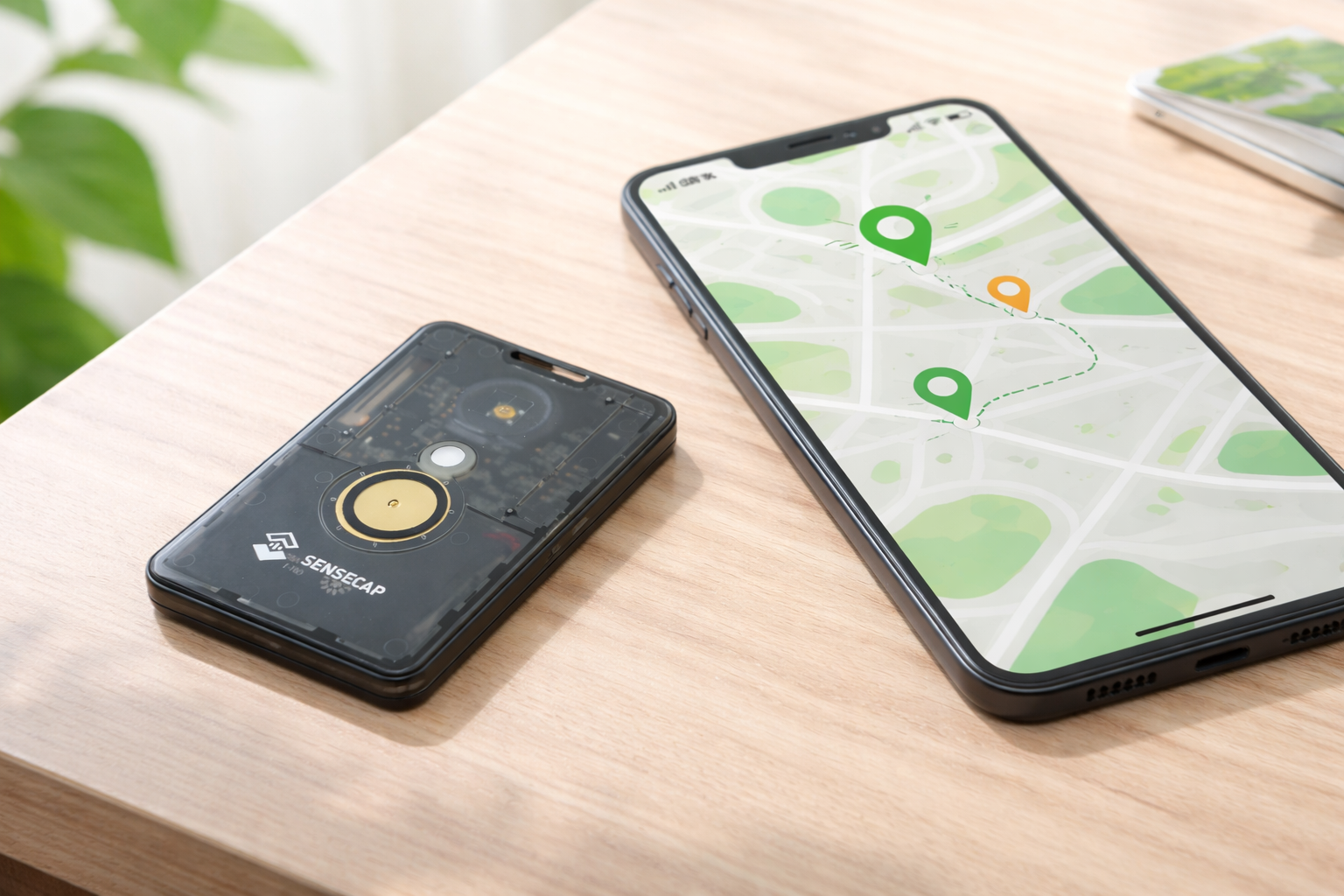
The devices are small, low-power, and pair with your mobile phone through Bluetooth. That gives you a more comfortable way to type messages and see positions on a map, while the radio does the actual communication in the background.
Compared to most similar tools on the market, Meshtastic is remarkably low-cost. That makes it accessible to groups and communities who would never have considered buying specialized communication equipment before.
Who could benefit?
To be honest, Meshtastic is still new in Japan. There are very few legally available devices so far, and the global community mostly communicates in English. One of our goals at Karida is to make this technology more accessible to people here.
We see many groups that could benefit. Hunting teams that split up across ridges and need to know where everyone is. Forest workers spread across remote sites without phone coverage. Hiking clubs where the group leader wants to keep track of slower walkers. Youth groups and scout leaders who are responsible for children outdoors. Patrol and rescue teams who need coordination in areas without coverage. And rural communities looking for a reliable plan B when cell towers go down during typhoons or earthquakes.
The common thread is simple: people who are responsible for other people in places where phones are not reliable.
Good to know
We think honesty matters more than hype. Meshtastic is a useful tool, but it has limits.
It does not guarantee that every message arrives. In difficult terrain, messages can get lost. But to be fair, very few communication tools can guarantee delivery in remote areas. What Meshtastic does well is give your team an extra layer of communication that works independently from mobile networks, at very low cost.
It is not a replacement for your phone, and it is not a substitute for dedicated emergency rescue equipment. The best way to think about it: Meshtastic is one piece in your communication plan. It plays well alongside other tools. Your phone covers areas with mobile signal. Meshtastic covers the gaps. And for true emergencies in remote areas, you still want a dedicated rescue option.
The investment is small, the setup is simple, and honestly, it is fun. There is something satisfying about sending your first message across a valley without any infrastructure involved.
Curious to try it?
The best way to understand Meshtastic is to hold a device and send your first message. It takes about ten minutes to set up, and most people are surprised how easy it is.
If you are new to this, our first field day checklist walks you through the basics. And if you want to know whether Meshtastic is legal to use in Japan (short answer: yes, with the right equipment), take a look at our Giteki guide.
Have questions? We are happy to help. Get in touch any time.